
Wilds Are Working: Logyard Brewing
Wilds Are Working: Logyard Brewing
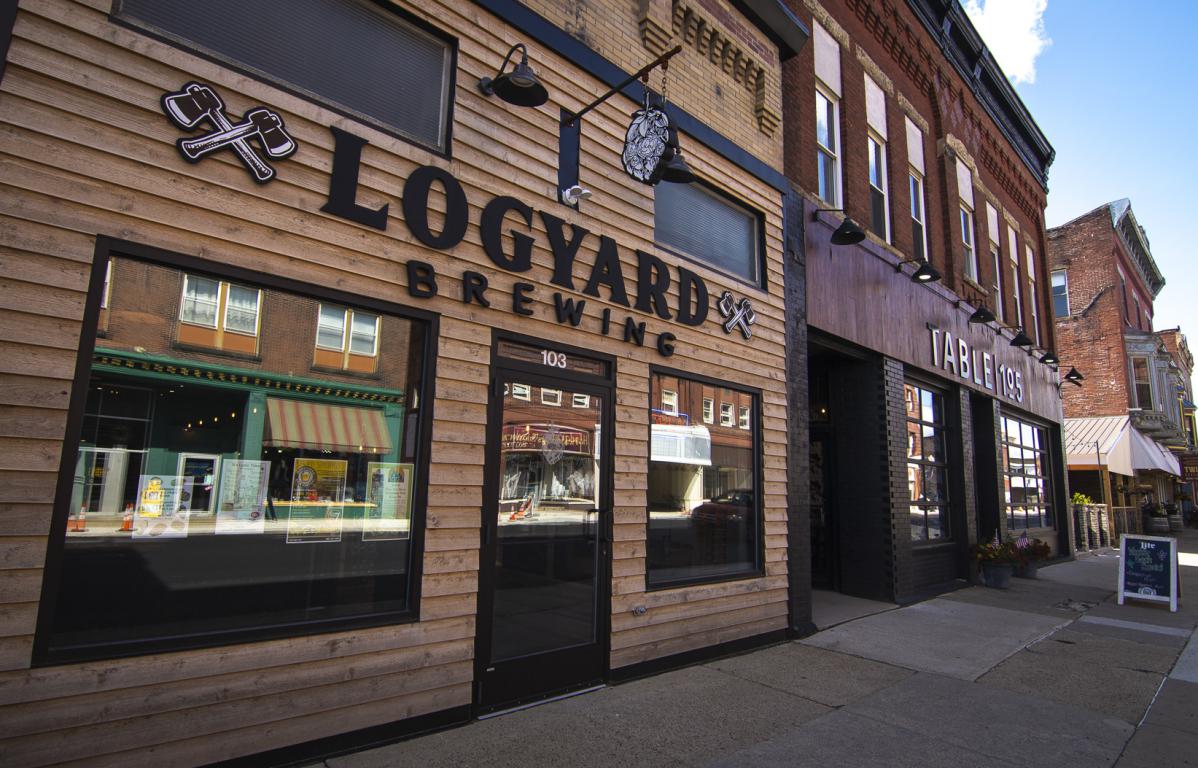
Logyard Brewing is located along Scenic Route 6 and the Allegheny National Forest in Kane, Pennsylvania.
Kate: Hi. This is Kate Kennedy from the Kane Area Development Center, serving as a PA Wilds Ambassador for the Wilds Are Working series. I’m here today with Royce Novosel-Johnson and Mike Dunn from Logyard Brewing. Welcome, Royce and Mike. We are glad to have you with us to share how you’re pivoting your company in these unchartered times.
Royce: Thanks for having us, Kate.
Mike: Thank you, Kate.
Kate: Well, why don’t we go ahead and start with who you are. So will you describe Logyard Brewing for us?
Mike: Sure.
Royce: Yes. So we are a craft brewery here in Kane, about a year and a half in, we’ve been in production. We have a production facility in Kane. We have a nice taproom. We’re on the Main Street and Route 6 in Kane. We also are big into distribution. So we distribute to currently forty-four different counties in Pennsylvania, including all of the Pennsylvania Wilds. We’ll keep expanding from there. I’m originally from Kane, lived elsewhere for a while, moved back a few years ago. I met Mike when we worked together in D.C. and he was trying to start a brewery, and was is interested in starting a brewery in Northern Virginia area and talked about the difficulties and doing it there, and then we talked about the advantages of potentially doing something like that in Kane in a rural community, and especially with the economic impact it could have for a place like Kane, more so than it would for Northern Virginia. Not that there’s anything wrong with Northern Virginia. And we decided to make a go of it with [our] third partner, Tim Robinson, who’s not with us for the interview here, but the three of us really came together and put this thing in motion.
Kate: So you’re in Kane, which is in the PA Wilds. What has that been like for you … How many people are you employing and how has that played out for you being here in the Wilds?
Mike: Well, it’s been fantastic for us. That was one of the main points, when Royce and myself and Tim were talking about and why we chose Kane, a part of the PA Wilds, as most people would think it was really a weakness, but a perceived weakness, when it was actually a strength. And it’s enabled us to focus on distribution as opposed to having to rely on heavily foot traffic taproom like most breweries. So prior to COVID-19, we employed 18 people. And right now with our transitional period, we’re trying to ramp back up to that as well. So prior to that, a few months ago, it was 18.
Kate: So you have the brewery where you actually do the brewing and then you have the tap room, lots of distribution throughout PA Wilds and beyond. How have you had to pivot your operations since the COVID-19 restrictions?
Royce: Well, when this whole thing hit, we had been preparing for a couple large rollouts in different markets and that included a lot of bars and restaurants. And that’s the vast majority of where our beer goes to. It’s probably 80 percent of where all of our beer ends up. So we had a fully stocked cooler. We had fermenters completely filled with beer. And so when this all hit, at that point it became an oversupply of beer. So we couldn’t brew. We couldn’t do anything else because we didn’t have the room. So unfortunately, we had to lay everybody off with the expectation that given time to weather the storm, we’ll be able to start bringing people back. And that’s where we are now. And one of the ways we got through this was to be able to bring on these new markets. And we’re fortunate we have some really good partners in these markets, such as Penn Beer up in Erie and Mid-State [Beverage] down Williamsport that just rolled us out, because in an ideal world, this is not the time you’re going to launch a new brand into a market. And, you know, first conversations were, ‘let’s hold off until things normalize,’ but nobody knows when that’s going to be. So we said, ‘hey, look, you know, if we want to make sure there’s still a Logyard when this is all said and done, we need to move this forward. We need to get this beer into the distributors, the grocery stores, everywhere that is moving beer and we need to do it now.’ And they came on board with that and we’ve rolled out with these two markets. So we’re laying a good foundation in these new places. We just realized that we couldn’t sell as much in a concentrated area, so we had to expand this area a little bit faster than we normally would have planned.
Mike: And for us, it’s actually helped fast track a lot of the corporate relationships as they’re looking to help local breweries. So it’s fast tracked us. As Royce mentioned, not just for those two partners that we added — Mid-State Beverage in Williamsport and Penn Beer Company in Erie — it came with a portfolio of 16 additional counties for us, which was great. But some of the corporate entities that we have now become corporate approved with during all of this have then Wegmans, Whole Foods, Giant Foods, Giant Eagle. So as we now permeate throughout the state, it’s really helped us from that now kind of touching every distribution point other than a bar and restaurant. So from convenience stores to grocery stores, to six pack shops and all of the other local markets there across those counties.
Kate: So it kind of sped up some of your longer term goals and some of those things have worked out pretty well for you?
Mike: Yeah, well, they weren’t necessarily longer term goals. They were short, shorter term goals for us, but it accelerated the approval process for these companies. So it was great for us.
Kate: Did you guys feel like you had any downtime? And if you did, what did you do with it?
Mike: Yeah, we did have a lot of downtime … as you know, I live in Arlington, Virginia, with my family and haven’t transitioned up here yet. So fortunately, I am, and in less than 60 days. That said, Royce and myself, we had to pivot to do deliveries of home deliveries. And so Royce was running around every day doing those, as well as with a couple of other folks. So that was one way that we started to pivot. We were doing distribution to people’s homes or work in Warren County and northern McKean County and Bradford, as well as in Elk County down in St. Mary’s. So it’s unusual for us, but I think if we can make it work, it’s something that we’ll continue to do as things normalize, because it’s been great and it’s helped our brand tremendously.
Royce: And actually, there was a you know, we tried to look at the positives in everything. And, you know, one of the things that we were able to go through is really going through, on a more microscopic level, all of the different things that we have going on, all of the different processes. And we finally once had time to catch our breath and go through them with a fine tooth comb and realize, hey, we could probably improve this process or we could do this a little bit differently and it would either, you know, conserve water or energy or something like that, or it could make our lives easier for anybody that’s working in this certain capacity and whichever task we’re taking on. So, I mean, there’s some downtime, but really, you know, there was really two weeks where there was almost nothing. And then it was, you know, maintaining the beer in the tank. Then it became, let’s do a deep dive into what we have going on and try to make the most of this time that we have.
Kate: That’s important because you don’t often get time to really take that deep dive like you’re saying, so that’s great. It sounds like you also got the chance to not only on a wider level, continue to try to find ways to get your product out there, but also locally with those deliveries, really making some accommodations to make sure people could still have your products available to them. How do you stay in touch with your customers?
Mike: A lot of it is socially getting in touch with the customer, so opening up the new channels of communication through our online ordering portal as well as obviously our ‘contact us’ through our Facebook, Instagram and our website. So there were many avenues of channels of communication. It was just a different method of communication, I guess, than typical because we’d have a lot of people that would come through the actual tap room to ask, ‘where are these places that I can get your beer?’, as opposed to us having to direct them digitally.
Kate: Right. You have a pretty strong presence on social media, too…. I’ve seen a lot of great promotions that you’ve been doing throughout this entire thing. Like, for example, this weekend, you guys are doing something kind of cool.
Mike: Yeah.
Royce: Yeah. The beer and firewood special we have going on. You know, it fits very well into our brand and we have no shortage of wood that we can convert to firewood. And so we have beer as well. And, you know, this really is the weekend where it kicks off for camping, and people stock up on both when they go out and hit the campsite. So, you know, if we can save them a little money on the firewood and we can give them the beer directly while they’re there, it’s a, you know, I want to I don’t say it’s a one-stop shop, but at least you can get two things in the same place.
Kate: The very necessary things for camping around here.
Royce: Yeah.
Kate: What operational pivots or approaches will you take once things start to reopen?
Mike: I think one of the things is really focusing on constant hygiene for us. The wiping down the doors, the bathrooms…. We already run essentially a glorified yeast factory that we’re trying to always mitigate bacteria. So we are very conscious of that. And we have a very strict regimen of cleaning as it is. But I think that’s certainly going to help us from an operational standpoint, to make certain that we take additional necessary steps.
Kate: Particularly with the taproom reopens, I’m sure.
Mike: Correct.
Royce: There will be a process in place so that, you know, any of our employees ourselves, anybody that’s up here, know we have to clean things on a routine basis. And we’ll establish those rules, whether it’s on the hour. Things like our mug club program where, you know, you use the same mug over and over again, potentially, we’ll probably have to modify that so that you get a clean glass every time. You’re not putting somebody’s used glass on the rinse apparatus that we have on our tap system. And we just want to make sure that we are being as smart as possible with that. I mean, we run a food manufacturing facility. That’s our brewery. Our tap room, you know, functions almost as a bar restaurant. So we have to keep things clean and hygienic and sanitary. But this, we just have to up it even more. And that’s fine. I mean, that comes with it. And if, you know, if we weren’t doing it in the first place, it would be a lot harder. But the fact is, we always tried to keep it as clean as possible and as sanitary as possible, so it’s just a few minor improvements.
Kate: Have you seen any silver linings during this time?
Mike: I think for us, one of the silver linings is that across the state we’ve seen now the larger grocery stores and convenience stores really kind of starting to focus on the local and hyper local communities, as opposed to necessarily having it at 5 percent of their beer portfolio, it’s now taking over 50 percent of their beer portfolio. So it’s certainly helped us as well as I think that there’s going to be a lot of companies that certainly go out of business because of this, unfortunately. So it’s going to certainly narrow the craft breweries across the state. We’ve seen a number of those closing already that relied on their taproom exclusively. So I think that there’s definitely silver linings. People are becoming, now, more willing to collaborate, as well, across breweries we’re seeing and help one another out. I’ve seen that as well. So it’s also helped us to be recognized by some of the larger companies for supplies. So now with our can supplier, amidst all of this, we’re able to order truckloads at a time and have them warehouse for us. So our cost savings have been significant. And now with this pivot, that’s then certainly been a silver lining for us.
Royce: I think just going to add on that, you know, the support that we see. From our everyday customer that does something like they buy a membership to our mug club for a hundred dollars, and usually that’s something that as a member, you try to chip away at that over the course of a year and they sign up not knowing when they can do that or take advantage of the perks. And they say, ‘we just want to make sure sure you guys are still around when this whole thing’s done.’ You know, we heard it from the head of sales down in our distributor in Pittsburgh. He just said, ‘I don’t want to live in a world where I can’t, you know, have a Misery Whip, which is one of our beers, or be able to go buy a Bucking Birch, you know. So what can we do to make sure that together we can weather this storm and get you guys through it?’ Because with every company that’s going through this, it’s very difficult. There’s been a lot of questioning of do you make it through and how do you adapt and how you adjust and you can’t put it down on a piece of paper. You take it a day at a time and wait till you get the new set of orders that allows you to do certain things. So we’re kind of that perfect sized company and brewery where we’re not so big that we’re sitting on millions of dollars worth of beer, that were stockpiled that we don’t have anywhere to put it. We’re also not too small that we can’t keep moving. I mean, we have our own canning line. We have, you know, company vehicles that we can get our beer to two different locations. So, you know, we’re fortunate, whereas everyone won’t be. And that’s not to rub it in. We’re just thankful that we are in this position and our heart goes out to people that there won’t be as fortunate. We wish everybody the best that’s going through this. We’re no different than everybody else, pretty much.
Kate: Yeah, but you’ve done a nice job of balancing the taproom locally, as well as the wider distribution and the merchandise and just really having different streams come in. So it sounds like that’s been paying off for this time? Plus, again, being in a small town in the PA Wilds here, you’re going to have that heart of the people that want to and are cheering for you and want to make the most of it with you.
Royce: Absolutely. Nothing I think motivates me more than when somebody says, you know, whether it’s a big player or somebody tries a beer one time, ‘I just don’t think a brewery will make it in this North West Pennsylvania. You know, it’s just to rural stock. It’s not going to happen.’ We love it. We love and we can overcome obstacles. It just fuels us. And we can just keep moving on.
Mike: Yeah.
Kate: OK, two more quick questions. Are there any programs, resources or organizations that you found helpful that you do encourage other small businesses to check out?
Royce: Yeah, I know the Small Business Development Center, specifically the one down in Clarion and Aleshia Marshall down there, you know, she’s our eyes and ears out there. She would be very quick to let us know of opportunities that were coming up, that we should probably throw our hat in the ring for. You know, local resources, Kate, you were one. We have all of these resources and these partners around that you have to be willing to make these partnerships and accept help, because when you do, that’s how we found out a lot of our information. North West Bank has been very helpful with getting our information that we need, making sure it’s accurate so that we can take advantage of any funding that’s available, to local friends, friends from other states. Same thing. They don’t want to come back to the area and we’re not here to name a few.
Mike: Yeah, I second all of those. Certainly resources for us, not just that our for the public, it’s been other breweries [who] said, ‘here, here’s what we’re doing. Here [are] ways you can pivot.’ And we’ve collaborated not just necessarily on brewing beers together, but how to weather this storm and getting creative. And here’s how you can help set up your online store to make it easier for your customers. A lot of different resources out there. It’s just been tremendous. The sense of community from everyone willing to help to say, ‘hey, this isn’t just one town or one county. It’s a country.’ And everybody’s come together and it’s been almost as if, though, we are a small community.
Royce: And I got a call one day from somebody at the PA Wilds, and they just wanted to ask some questions. They just want to know how are we doing? You know. What type of things were we going through that might benefit another member or business within the PA Wilds region? And the same thing with the Allegheny National Forest Visitors Bureau. I mean, they’re actively reaching out and trying to gather information, not to just keep to themselves, to then push that onto another group that might be struggling, that might not know that this other option is there, that, you know, we tweaked something that they could take advantage of. So when you get a phone call, something like that — I also got one from the McKean County Economic Development Council — and just curious, ‘hey, are you guys gonna be OK? Share some good news, in a time when there’s so much negative. Tell us something good.’ So we really appreciate it. And, you know, there’s a reason that we like and we’re proud to be part of the PA Wilds, and the Allegheny National Forest Visitors Bureau and the Kane Chamber of Commerce. Because when times like this happen, you guys reach out and you’re helpful to us, and you allow us to share our story that hopefully impacts and helps somebody else that might not have figured out that next step yet.
Kate: Yeah. You guys definitely have some good things to share. So just to wrap it up, are there any moments of humanity or inspiration that you’d want to share to end on kind of a good news note?
Mike: A certain sense of humanity is I think that if you look at CJ Spirits, how they came together and started providing hand sanitizer and creating that for us locally so that everybody can stay safe or try to mitigate the viruses whenever possible, since there is an extreme shortage, as you know. So that was wonderful, as well as just the community coming together and helping us in any way, shape or form, as Royce mentioned, from phone calls to texts. We’re willing to help in any fashion that we can. I think it’s just been very humbling, the community here.
Kate: Awesome. Yeah, well, you guys keep up the great work. Is there anything else that you want to add that you didn’t get to share before we close?
Mike: Yeah. If you have any questions, you can check us out online. If you don’t already follow us on Facebook or on Instagram, just Facebook.com/LogyardBrewing or Instagram.com/LogyardBrewing. Feel free to go to our website, which is LogyardBrewing.com, see our different beers that we have in our online store there. We’re happy to answer any questions you have, but [we’d] love to have you as part of our beer community.
Kate: Thank you guys so much for your time. For those watching the questions and answers for the interview and other resources for small businesses are on the PA Wilds website, which is WildsCoPA.org. Thank you. And you can also apply to share your story there as well. So thanks again, you guys. Take care, and we’ll see everyone later!
Mike: Ok, Kate! Cheers!
Royce: Cheers!
Mike: Bye!
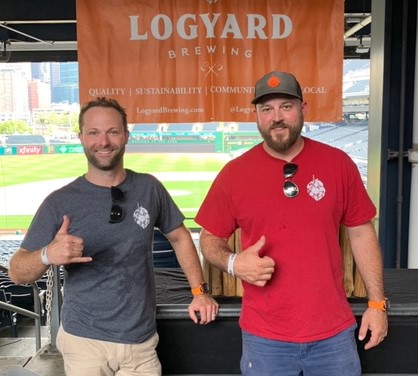
Mike Dunn + Royce Novosel-Johnson
Owners, Logyard Brewing
THIS EPISODE FEATURES:
Royce Novosel-Johnson and Mike Dunn of Logyard Brewing are interviewed by Kate Kennedy of the Kane Area Development Center.

Kate Kennedy
Executive Director, Kane Area Development Center
Kate brings over 7 years of non-profit experience into her role at the Kane Area Development Center (KADC), which supports and connects the Kane Chamber of Commerce, Kane Area Revitalization Enterprise and Kane Area Industrial Development Corporation. She is passionate about telling the stories of the people and places she loves, as demonstrated through the 100 Days of Kane, PA project where every day for 100 consecutive days she interviewed someone from her hometown to share about why they love where they live. Her previous work experience as a public relations specialist at homeless shelter, an elementary school counselor at a title one school and with an AmeriCorps program has helped prepare her for where she is today.
Has your business pivoted?
The Wild Are Working: Rural Entrepreneurship in Uncharted Times series offers opportunities for small business owners and organizations to share how they are pivoting to survive the coronavirus crisis. Through 5-10 minute live interviews, participating entrepreneurs help cross-pollinate ideas and provide insights on how people can support small businesses amid COVID-19.
Learn more about how your business can get involved here.