
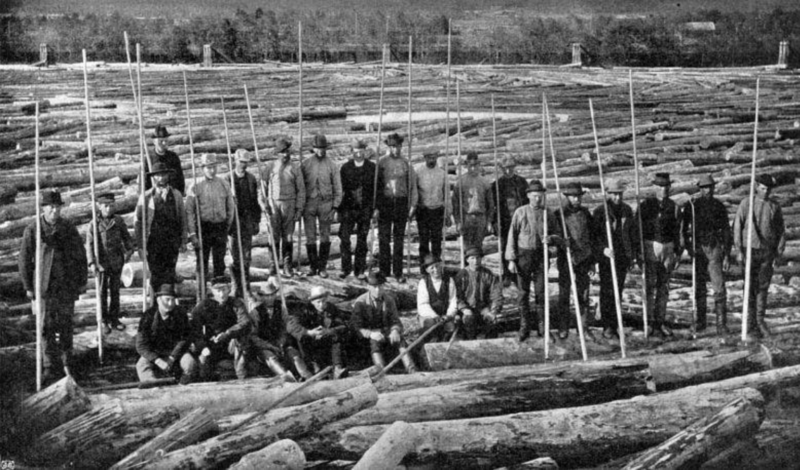
Lumber Heritage Region: Uplifting the lumber industry’s history, impacts
Lumber Heritage Region: Uplifting the lumber industry’s history, impacts
Cameron County | Dark Skies landscape of the Pennsylvania Wilds

Just what is the Lumber Heritage Region?
The Lumber Heritage Region, established in 2001, is one of twelve designated Heritage Areas in Pennsylvania. It spans a 15-county region in north west and north central Pennsylvania that encompasses the entire PA Wilds region. It accentuates the importance of the lumber industry for the past, present, and future. The goal of this Heritage Area is to market its assets to potential visitors, to serve as a resource to the PA hardwood industry and to keep the economic impact of the region in the forefront.
After years of research and planning, the state of Pennsylvania established its first Heritage Area in 1991. Heritage Areas are geographic regions or corridors that span two or more counties and contain a multitude of historic, recreational, natural and scenic resources of state and national significance that exemplify the heritage of PA. Through this designation and regional partnerships, resources are identified, protected and enhanced.
As with many Heritage Areas, the Lumber Heritage Region is rural and sparsely populated. Some of the key focal points and highlighted features in the Lumber Heritage Region are Millionaires Row in Williamsport, once home to the most millionaires per capita due to the lumber industry; the Kinzua Viaduct (now the Skywalk at Kinzua Bridge State Park); old growth forest areas such as Cook Forest State Park; and the PA Lumber Museum, which is home to historical information and artifacts and hosts a number of fun events.

The Lumber Heritage Region conducts other education and outreach programs and has created a lumber themed trail throughout the region with maps, a heritage water trail pictorial, and a collaboration of local lumbering legends. In addition to all this, LHR also offers a mini-grant program to help enhance work to grow the region. LHR features regional industry partners and organizations as members in its online directory.
Pennsylvania and its Penn’s Woods played an important role in our national history and the Lumber Heritage designation is invaluable in keeping the history preserved, stewardship enhanced and the current lumber industry vibrant.
“The true way to save forests is not to plant new ones, but to protect and rightly use those that are standing now,” Gifford Pinchot, former Pennsylvania Governor and father of American Conservation.
The Lumber Heritage Region is a community partner member of the Wilds Cooperative of Pennsylvania. Learn more about the Lumber Heritage Region and leave them a review or recommendation on their WCO profile.
RECENT WCO MEMBER SPOTLIGHTS
- Mountain View Sheep Farm: Creating Products to Help ‘Ewe’
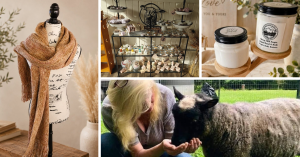 Bonnie Troemel began Mountain View Sheep Farm in 2018, but her love for sheep started far before that. She began breeding and raising Shetland sheep back in 2010. She has been using their wool for fiber arts and their milk for soap ever since, now running her farm in Emporium, in the Dark Skies and Elk Country landscapes within the Pennsylvania Wilds region.
 - PA Wilds Cooperative Members, Partners gather for Fall 2026 Member Meeting in Kane
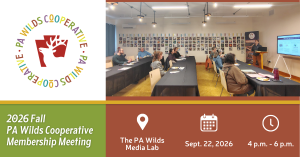 PA Wilds Cooperative members and network partners were invited to the PA Wilds Media Lab in uptown Kane on Tuesday, September 22, for the second of two Membership Meetings held in 2026.
 - Full Circle Bioconversion LLC: Turning food waste into a business
 As a child, the Pennsylvania woods were Aubrey Fornwalt’s playground and the stream was her pool. After a life change in 2016 led her back to her childhood home in Lycoming County, Fornwalt took a risk and bought some black soldier flies for a composting business, taking inspiration from the woods and insects she loved as a child. Two years later, it grew into what would become Full Circle Bioconversion, based in the city of Williamsport in the Pine Creek Valley and PA Grand Canyon landscape and I-80 Frontier landscape of the Pennsylvania Wilds region.